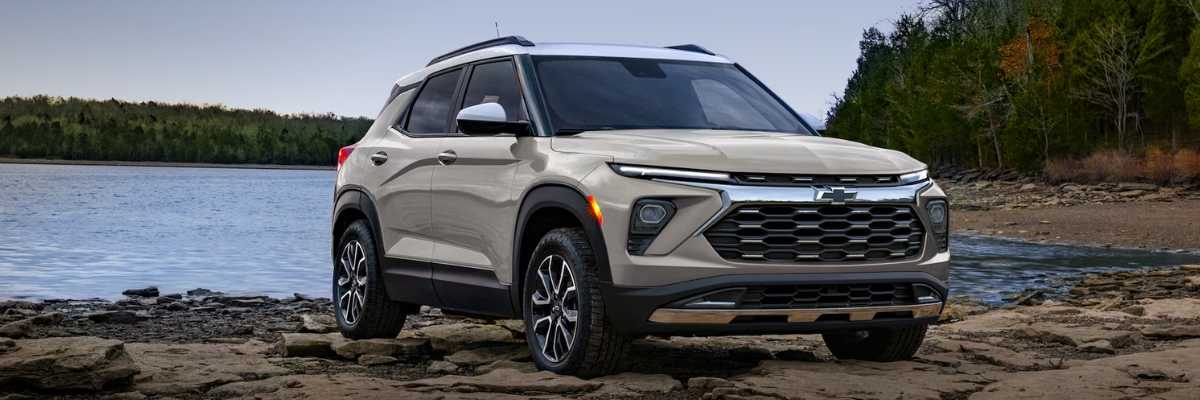
2020 Chevrolet Blazer

With its bold exterior style and best-in-class agility, the 2020 Chevrolet Blazer just might be the sportiest SUV on the road.
What’s new for the 2020 Chevrolet Blazer?
The all-new first-generation Blazer was introduced for the 2019 model year, bringing a sporty, agile SUV to the old-school nameplate. After only one year on the market, Chevy is already making some notable improvements. The engine stop-start function can now be disabled, so you can get off to a quicker start when the light turns green. Now, when you add the tow package, you also get trailer hitch guidance. This technology makes it easy to line up your Blazer with a trailer.
Why buy the 2020 Chevrolet Blazer?
When Chevy revived the Blazer, they set out to make a stylish SUV with sports-car-like agility. The result is something unlike anything else in the midsize SUV segment. Unlike its vanilla competitors, the Blazer cuts a striking image with its Camaro-like exterior styling. This SUV also offers a strong V6 powertrain and an agile performance. And none of its competitors even come close to matching its performance on winding roads and around corners.
There’s also a lot to like about the 2020 Chevrolet Blazer tech lineup – especially the Infotainment 3 system. Not only does it come standard with Apple CarPlay and Android Auto smartphone integration, but its crisp, clear touchscreen is also very easy to use. Its swipe gestures and intuitive app functions are icing on the cake.

Which 2020 Chevrolet Blazer trim model should I choose?
This five-passenger midsize SUV is available as four trim models: the base L, midrange LT, sporty SR, and premium Premier. The midrange LT trim is further divided into three sub-trims: 1LT, 2LT, and 3LT. The Blazer SUV trim that’s right for you is the one that’s got the features you want at a price you can appreciate.
Every Blazer comes standard with conveniences like xenon headlights and keyless ignition and entry. The standard tech lineup is outstanding; it includes Chevy’s Infotainment 3 system and all that that entails, from the 8-inch touchscreen to the Apple CarPlay and Android Auto smartphone integration features. The OnStar emergency telematics system is also standard, giving you extra peace of mind with features like automatic collision notification.
To the standard lineup, the 1LT adds a power-adjustable driver seat and a spare tire. The 2LT steps up your game with the 2.0-liter engine upgrade and optional all-wheel drive. In the 3LT, you get a lot of extra equipment, including remote engine start technology, leather upholstery, and heated front seats.
The sporty RS is defined by its exterior styling, including 20-inch wheels, dual exhaust tips, and a blacked-out front grille. Inside, you’ll find extra comfort and convenience with the household-style power outlet, ambient lighting, and heated steering wheel.
The Premier adds to the RS lineup with exclusive chrome exterior accents. Inside, you’ll find all-out luxury with ventilated front seats, heated rear seats, and an eight-speaker Bose audio system.
Is the 2020 Chevrolet Blazer four-wheel drive or all-wheel drive?
All Blazer trims can be optioned with all-wheel drive. Besides bolstering the Blazer’s exceptional cornering capabilities, this performance technology offers an all-around sportier performance on the pavement. During wet weather, all-wheel drive also enhances traction for increased safety. And you can also take your all-wheel-drive Blazer down light trails, because it helps you move through the sand and mud without getting stuck.

How much is the 2020 Chevrolet Blazer?
This sporty SUV features a starting MSRP of just $28,800. That’s in line with segment competitors, but you get so much more with the Blazer, from its uniquely bold styling to sports-coupe-style performance.